




What is the effect of overcharging on a lead - acid battery when using a Lead Acid Battery Smart Charger?
 Jun 10, 2026|
 As a provider of Lead Acid Battery Smart Chargers, I've witnessed firsthand the importance of understanding the effects of overcharging on lead - acid batteries. In this blog, I'll delve into the science behind overcharging, its consequences, and how our chargers can help prevent such issues.
Understanding Lead - Acid Batteries
Lead - acid batteries are a common choice for various applications, from automotive to renewable energy storage. They consist of lead plates immersed in an electrolyte solution of sulfuric acid and water. During the charging process, electrical energy is converted into chemical energy, which is stored in the battery. When the battery is discharged, the chemical energy is converted back into electrical energy.
The Charging Process and Overcharging
A proper charging process for lead - acid batteries typically involves three stages: bulk charging, absorption charging, and float charging. In the bulk charging stage, the charger supplies a high current to quickly charge the battery to around 80% of its capacity. The absorption charging stage follows, where the charger reduces the current while maintaining a constant voltage to fully charge the battery. Finally, the float charging stage provides a low - level charge to keep the battery fully charged without overcharging it.
Overcharging occurs when the battery is charged beyond its capacity or when the charging voltage is too high for an extended period. This can happen due to a malfunctioning charger, incorrect charging settings, or simply leaving the battery connected to the charger for too long.
Effects of Overcharging on Lead - Acid Batteries
1. Water Loss
One of the most significant effects of overcharging is water loss from the electrolyte. When a lead - acid battery is overcharged, the excess electrical energy causes the water in the electrolyte to break down into hydrogen and oxygen gases through a process called electrolysis. This results in a decrease in the electrolyte level, which can expose the lead plates and lead to reduced battery performance and lifespan.
2. Plate Corrosion
Overcharging can also accelerate the corrosion of the lead plates. The high charging voltage can cause the lead plates to oxidize, forming lead sulfate. This not only reduces the battery's capacity but can also lead to the formation of hard lead sulfate crystals, which are difficult to convert back into active lead during the charging process. Over time, this can lead to irreversible damage to the battery.

3. Heat Generation
Excessive charging can generate a significant amount of heat. High temperatures can further accelerate the chemical reactions inside the battery, leading to increased water loss, plate corrosion, and a decrease in battery efficiency. In extreme cases, the heat can cause the battery to swell or even explode.
4. Reduced Battery Lifespan
All of these factors combined can significantly reduce the lifespan of a lead - acid battery. A battery that is frequently overcharged may need to be replaced much earlier than one that is properly charged, resulting in increased costs for the user.
How Our Lead Acid Battery Smart Chargers Prevent Overcharging
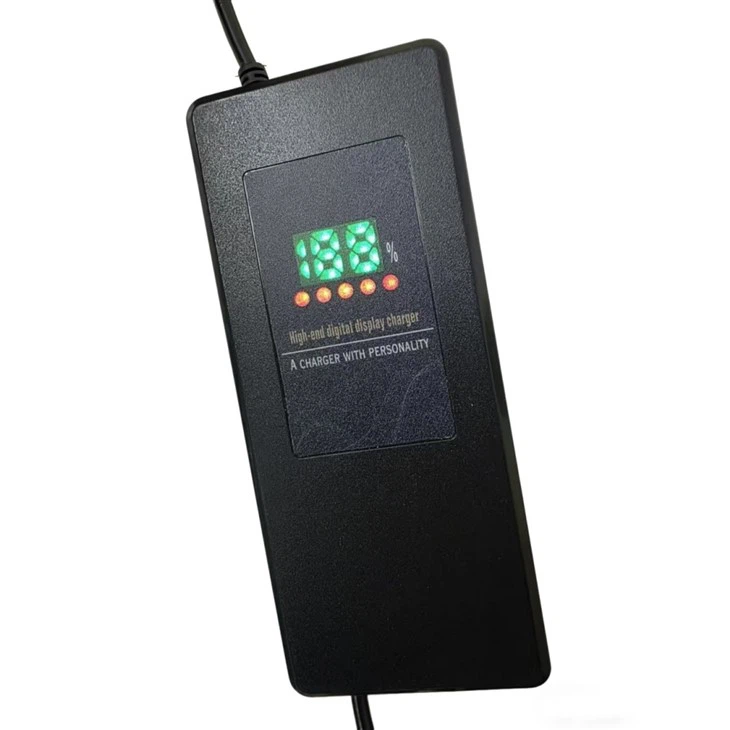
Our Lead Acid Battery Smart Chargers are designed to prevent overcharging and ensure the long - term health of lead - acid batteries. Here's how:
1. Intelligent Charging Algorithms
Our chargers use advanced charging algorithms that monitor the battery's state of charge and adjust the charging current and voltage accordingly. This ensures that the battery is charged in a safe and efficient manner, avoiding overcharging.
2. Automatic Shut - off
Once the battery is fully charged, our chargers automatically switch to a float charging mode or shut off completely. This prevents the battery from being overcharged, even if it is left connected to the charger for an extended period.
3. Temperature Compensation
Our chargers are equipped with temperature sensors that adjust the charging voltage based on the battery's temperature. This helps to prevent overcharging in hot environments and ensures that the battery is charged optimally at all temperatures.
Our Product Range
We offer a wide range of Lead Acid Battery Smart Chargers to meet the diverse needs of our customers. For example, our Waterproof Portable Solar Cell Charge is perfect for outdoor applications, providing a reliable and efficient way to charge lead - acid batteries using solar power. Our 48v 15ah Battery Charger is designed for specific battery capacities, ensuring a precise and safe charging process. And our Fast Charging E Bike Charger is ideal for electric bikes, providing a quick and efficient charge to keep you on the move.
Conclusion and Call to Action
Overcharging can have a detrimental effect on lead - acid batteries, reducing their performance and lifespan. However, with our Lead Acid Battery Smart Chargers, you can ensure that your batteries are charged safely and efficiently, maximizing their lifespan and saving you money in the long run.
If you're interested in learning more about our products or are looking to purchase a Lead Acid Battery Smart Charger, we encourage you to contact us for a detailed discussion. Our team of experts is ready to assist you in finding the right charger for your specific needs.
References
- Linden, D., & Reddy, T. B. (2002). Handbook of Batteries. McGraw - Hill.
- Berndt, D. (2000). Lead - Acid Batteries: Science and Technology. Springer.
- Rand, D. A. J., Woods, R., & Garche, J. (2004). Lead - Acid Batteries: Fundamentals, Technology and Applications. Wiley - VCH.